VertiGuard® RT
Mobile posturography and evidence-based neurofeedback training for your patients.
This is what effective balance training looks like today.
Training balance in a targeted way
Based on the data from the diagnostic assessment, a training programme is created that is tailored to the individual patient and starts exactly where they are unsteady.
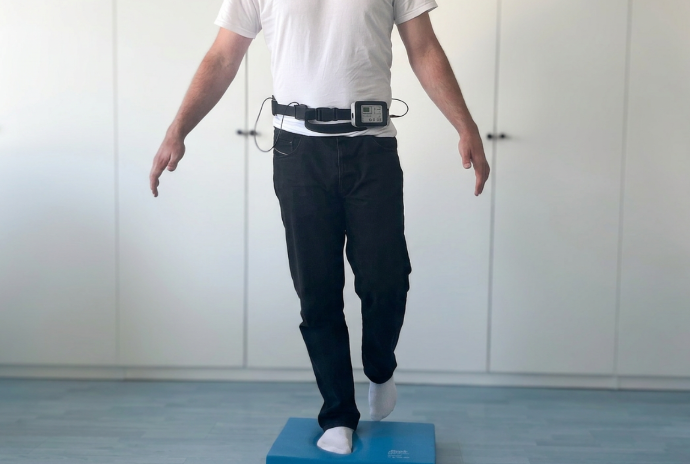
Vibrotactile neurofeedback training
The feedback is given by vibrations on the belt. No conscious reaction by the patient is required; the balance system processes the signal by itself.
That is precisely what makes the method more efficient than approaches that rely on conscious correction. For the patient the hurdle is lower, acceptance is higher and the result is better.
Individual
A training plan derived from the diagnosis, tailored to the largest deficits
Successful
Posturography before and after training makes the success visible
Evidence-based
Effectiveness demonstrated in international studies, including in accordance with ISO 14155-1/2
From the measurement to the training plan
The report determines what is trained. The belt takes care of the feedback.
Read out the deficits
The posturography results show which movements cause the patient difficulty.
Propose training
From this an individual training plan is created that addresses exactly these deficits.
Compare the success
A further measurement after training compares the progress with the initial value.
Why vibration on the belt
The patient has to react
- Requires a conscious reaction to the signal
- Ties up attention that is then missing for the movement itself
- A higher hurdle and correspondingly lower acceptance
The body reacts by itself
- Vibration on the belt, without any conscious reaction by the patient
- Attention stays with the movement
- Higher acceptance and therefore more effective results
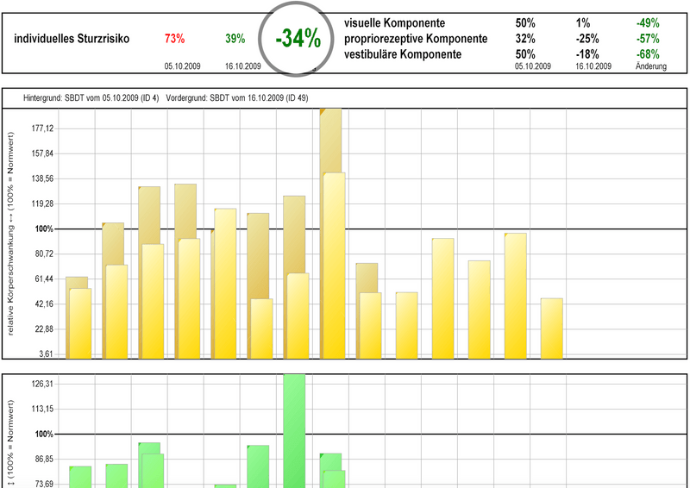
Success you can show
- A training plan that addresses the patient's largest deficits
- A comparison of posturography before and after training, graphical and quantitative
- Progress that you can present vividly to the patient
- Documentation for the report and further follow-up
Training balance in a targeted way
Based on the data from the diagnostic assessment, a training programme is created that is tailored to the individual patient and starts exactly where they are unsteady.
Vibrotactile neurofeedback training
The feedback is given by vibrations on the belt. No conscious reaction by the patient is required; the balance system processes the signal by itself.
That is precisely what makes the method more efficient than approaches that rely on conscious correction. For the patient the hurdle is lower, acceptance is higher and the result is better.
Individual
A training plan derived from the diagnosis, tailored to the largest deficits
Successful
Posturography before and after training makes the success visible
Evidence-based
Effectiveness demonstrated in international studies, including in accordance with ISO 14155-1/2
From the measurement to the training plan
The report determines what is trained. The belt takes care of the feedback.
Read out the deficits
The posturography results show which movements cause the patient difficulty.
Propose training
From this an individual training plan is created that addresses exactly these deficits.
Compare the success
A further measurement after training compares the progress with the initial value.
Why vibration on the belt
The patient has to react
- Requires a conscious reaction to the signal
- Ties up attention that is then missing for the movement itself
- A higher hurdle and correspondingly lower acceptance
The body reacts by itself
- Vibration on the belt, without any conscious reaction by the patient
- Attention stays with the movement
- Higher acceptance and therefore more effective results
Success you can show
- A training plan that addresses the patient's largest deficits
- A comparison of posturography before and after training, graphical and quantitative
- Progress that you can present vividly to the patient
- Documentation for the report and further follow-up